Key Takeaways
- Relying solely on P&IDs for industrial maintenance leaves teams with dangerous blindspots: hidden issues and missing context that can lead to surprise failures and safety risks.
- Blindspots in maintenance planning cause delays, extra site visits, and costly errors. Common culprits include outdated diagrams, lack of spatial context, and siloed information that prevent teams from seeing the full picture.
- A “Shared Reality” approach (combining digital twins with reality capture) makes these blindspots visible. By linking 3D scans with your P&IDs and asset information, maintenance teams get a live, interactive view of the site that everyone can trust.
- Industrial leaders are eliminating blindspots using digital twins and 3D streaming. This unified workspace lets all stakeholders see the same up-to-date information, improving safety, speeding up work, and reducing the need for blind on-site troubleshooting.
- Samp’s solution, Shared Reality, a cloud-based digital twin powered by AI, bridges P&IDs and the real world. It ensures no one is “managing assets with a blindfold on,” enabling smarter decisions and safer operations.
Introduction:
Operations fail when teams can’t see the site. Yet many maintenance teams are essentially working blindfolded: managing complex assets using only 2D Piping & Instrumentation Diagrams (P&IDs) that hide critical details and create dangerous blindspots. The result is invisible maintenance risks: teams think they know the facility, but reality on the ground is different. Studies show that up to 30% of an industrial facility’s information can be missing or wrong due to outdated and fragmented technical information. Most industrial risks don’t come from the equipment itself; they come from missing, outdated, or inconsistent information. When your view of the plant is half-blind, mistakes and delays are almost guaranteed.
The good news is that these blindspots can be eliminated. The key is a “Shared Reality” approach that makes invisible problems visible. This means unifying your trusted P&IDs with an accurate digital twin of the site. Samp offers exactly that solution: a Shared Reality workspace that combines an AI-generated digital twin with 3D streaming technology for industrial sites. It captures a high-fidelity 3D reality model of your facility and helps you link with real-world information and diagrams, so all teams see one synchronized truth. No more guesswork or surprises, maintenance planners, engineers, and field crews can finally work from the same visual playbook.
5 Critical Blindspots Hiding in Your P&IDs
Blindspot #1: Outdated or Inaccurate Diagrams
P&IDs are meant to reflect your process and equipment, but over the years they often fall out of sync with reality. Small on-site changes never make it back into the drawings. In aging facilities, outdated P&IDs and missing updates can create a huge blindspot. Nearly a third of your asset information might be wrong or missing.
When diagrams are outdated, teams go in blind. They lose time verifying equipment in the field rather than executing the work. Audits slow down as you scramble to confirm what’s really installed where. This blindspot leads to unplanned downtime, rework, and safety incidents. Learn how industrial teams use Samp to maintain documentation integrity.
Blindspot #2: Lack of Spatial Context (2D Limitations)
A P&ID is a schematic, it shows how components connect logically, but not where they sit physically. This lack of spatial context is a major blindspot. Without a 3D view of the site, teams cannot visualize the equipment layout or access points until they are physically on site. Common issues include unexpected access challenges, miscalculated work scope, and clearance problems. Our tutorials show how to visualize this information in practice.
Blindspot #3: Hidden Safety and Access Hazards
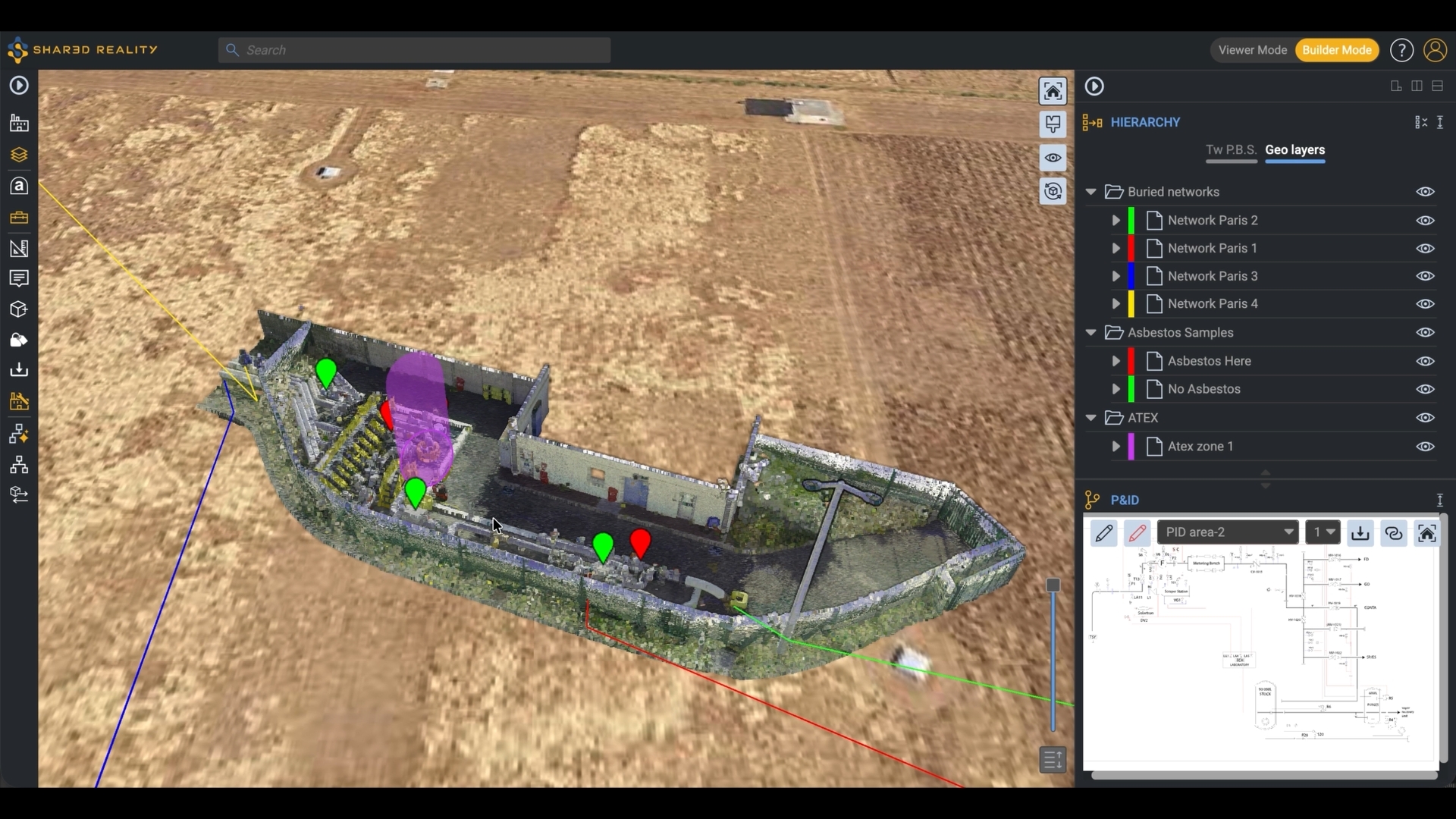
A P&ID might show a valve, but not whether it’s located 20 feet high or in a hazardous zone. Safety blindspots occur when teams rely on diagrams that don’t reflect real-world conditions. This creates risks during isolation procedures or inspections. A Shared Reality approach overlays hazards and access information onto a 3D reality model, helping teams spot issues before setting foot onsite.
Blindspot #4: Siloed Information and Missing Links
Vital information often lives in separate silos: P&IDs in one system, asset lists in another, maintenance logs somewhere else. This fragmentation forces teams to hunt across systems or rely on tribal knowledge. Samp’s workspace helps you connect P&IDs, equipment information, and maintenance records into one interface, so nothing is missed. Learn how this works on our integration page.
Blindspot #5: Tribal Knowledge and Training Gaps
P&IDs require interpretation and experience. Veteran staff often know what the diagrams miss, but when they leave, that knowledge disappears. New staff and contractors operate with partial information. Shared Reality provides an interactive visual training ground and captures expert knowledge for future teams. Explore our client stories to see how others have addressed this challenge.
How Shared Reality Eliminates P&ID Blindspots
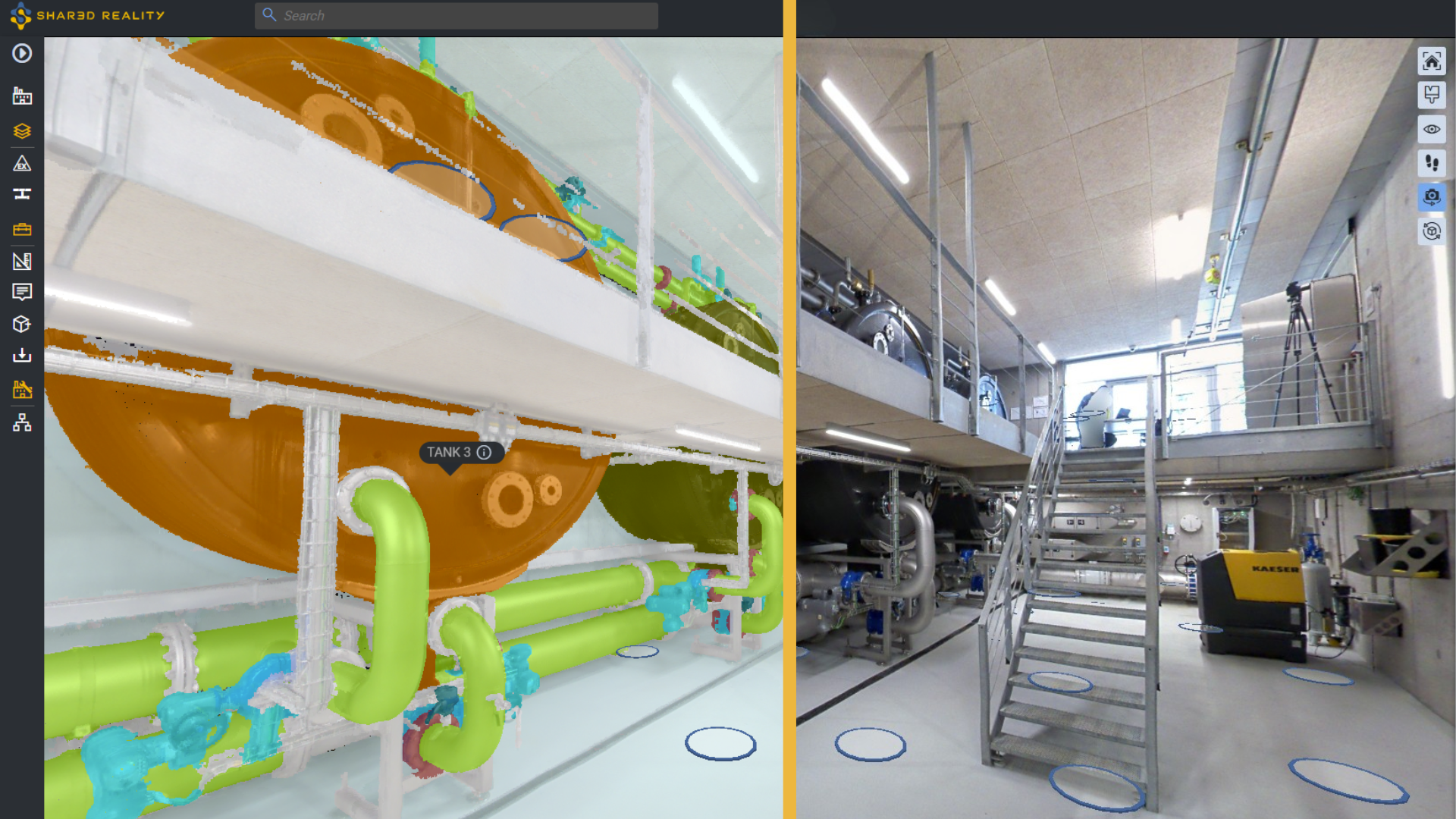
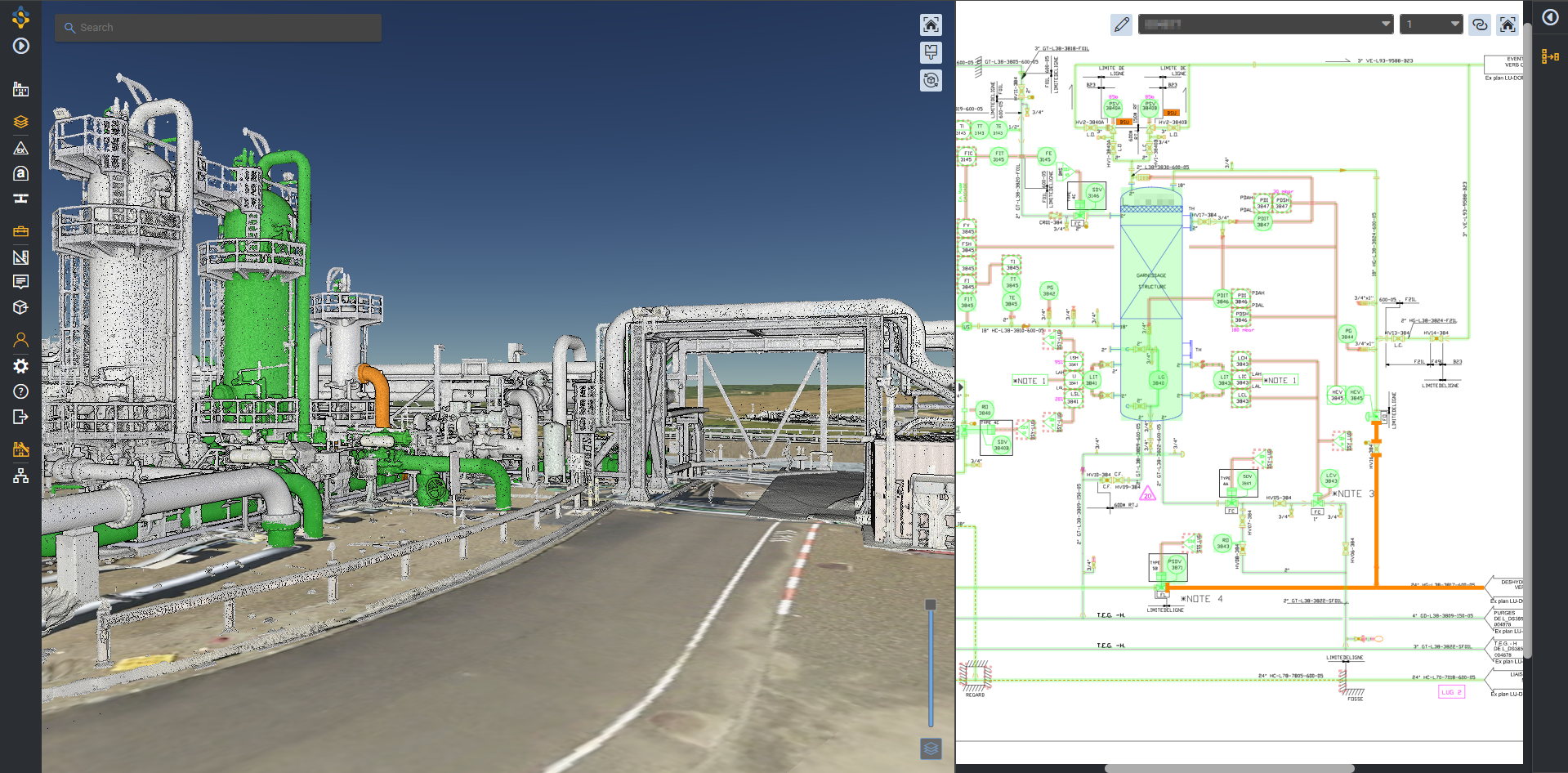
Samp’s Shared Reality workspace uses Digital Twin, Reality Capture, and 3D Streaming to eliminate all five blindspots. The process starts with a 3D scan of your facility. AI transforms it into an interactive digital twin. P&IDs and asset information are linked to the 3D model, creating a single source of truth.
The model is accessible from any location. Teams can perform virtual walkdowns, verify P&ID accuracy, and collaborate across departments. Reality is always up to date thanks to rapid scanning and AI reconciliation. By making the invisible visible, Shared Reality lets your team manage complex assets with confidence and clarity. Learn more about how we work on our company page.
FAQ: Blindspots in Maintenance
What are blindspots in industrial maintenance?
Blindspots are information gaps that prevent teams from seeing the full picture. Examples include outdated drawings, undocumented site changes, or missing safety context. These blindspots lead to mistakes, delays, and safety incidents.
What blindspots exist in P&IDs?
P&IDs can have outdated information, lack spatial layout, and miss critical access or hazard information. They are essential but limited. Blindspots arise when diagrams don’t reflect real-world conditions or aren’t connected to other asset information.
How can we eliminate blindspots in maintenance operations?
Using a digital twin and Shared Reality workspace like Samp, teams can unify 2D P&IDs with 3D site context and live information. This creates a single, accurate operational view and eliminates dangerous blindspots in your process.
Conclusion & CTA
Blindspots in P&IDs are preventable. With Shared Reality, your team can finally see the site clearly. From faster planning to safer execution, the benefits are immediate.
Stop managing complex assets with blindfolds on. Explore Samp’s use cases, integrations, FAQ, tutorials, and our company vision to learn how our workspace eliminates blindspots and brings clarity to every step of industrial maintenance.