Key Takeaways
- Brownfield environments change faster than traditional CAD workflows can keep up.
- CAD is optimized for design, not for managing as-built conditions on existing industrial sites.
- Brownfield digitalization requires a living, field-verified 3D reality model, not static drawings.
- A Shared Reality workspace aligns technical information with operational speed.
Introduction:
Brownfield digitalization fails for one recurring reason: the tools used are designed for design offices, not operating plants.
On existing industrial sites, information changes daily. Equipment is replaced. Piping is rerouted. Temporary modifications become permanent. Redlines accumulate. Maintenance teams adapt faster than documentation updates.
Yet many organizations still rely on CAD as the backbone of their Brownfield strategy.
CAD is powerful for new projects. It is precise, controlled, and structured. However, in Brownfield environments, precision without speed becomes a bottleneck. Updating drawings often requires engineering cycles, validation steps, and controlled releases that do not match the rhythm of operations.
For decision-makers responsible for reliability, safety, and turnaround preparation, this mismatch creates operational risk.
A different approach is required. Not another design tool, but a way to align digital representation with field reality.
This is where the Shared Reality solution provides a pragmatic alternative.
You can explore the overall approach here.
1. CAD Reflects Design Intent, Not As-Built Reality
In Brownfield sites, the gap between design intent and field conditions grows over time.
CAD models represent:
- As-designed layouts
- Approved engineering revisions
- Structured technical information
They rarely reflect:
- Unrecorded field adjustments
- Temporary fixes that became permanent
- Vendor-driven modifications
- Maintenance-driven adaptations
In an existing refinery, LNG terminal, or power plant, the physical asset always evolves faster than documentation.
When teams rely on CAD for Brownfield decision-making, they often face:
- Outdated drawings during asset walkdowns
- Conflicting versions of technical information
- Time lost verifying real-world conditions
The consequence is operational friction. Teams must validate what already exists before acting.
Brownfield digitalization cannot depend on a tool that assumes controlled design cycles. It must start from current, field-verified conditions.
For a deeper view of common documentation gaps in maintenance environments, see:
https://samp.ai/blindspots-in-maintenance-5-dangerous-gaps-in-your-pids/
2. CAD Workflows Are Too Slow for Existing Industrial Sites
Brownfield operations prioritize continuity. Production cannot pause while drawings are updated.
A typical CAD update process includes:
- Engineering modification request
- Model update
- Internal validation
- Version release
- Distribution
This structure is necessary for capital projects. It is not adapted to the daily tempo of existing industrial sites.
In Brownfield environments, operational questions are immediate:
- Can this valve be isolated safely?
- Is this line still active?
- Has this pump been rerouted?
- What changed since the last turnaround?
Waiting for drawing updates is not compatible with field reality.
Brownfield digitalization must support:
- Fast visual validation
- On-site verification
- Direct comparison between past and current conditions
- Immediate access to aligned technical information
A cloud-based 3D reality model, continuously enriched with verified information, matches this requirement far better than static CAD files.
This shift is not about replacing engineering rigor. It is about aligning the digital layer with operational speed.
For operational use cases in maintenance and project environments, see:
https://samp.ai/use-cases/
3. Brownfield Requires Context, Not Just Geometry
CAD focuses on geometry and design relationships. Brownfield management requires contextual understanding.
Operators need to know:
- What equipment is physically present
- What its current condition is
- How it connects to surrounding assets
- What documentation applies to that specific asset
In a Brownfield context, geometry alone is insufficient.
Effective brownfield digitalization integrates:
- 3D reality model
- Linked technical information
- Field observations
- Historical modifications
This creates operational context.
Instead of navigating folders, file structures, or disconnected drawings, teams work inside a visual, spatial environment that reflects real-world conditions.
This is the core logic behind a Shared Reality workspace.
For industry-specific applications across energy, water, chemicals, and maritime sectors:
https://samp.ai/industries/
How the Shared Reality Workspace Supports Brownfield Operations
A Shared Reality workspace is not a design tool.
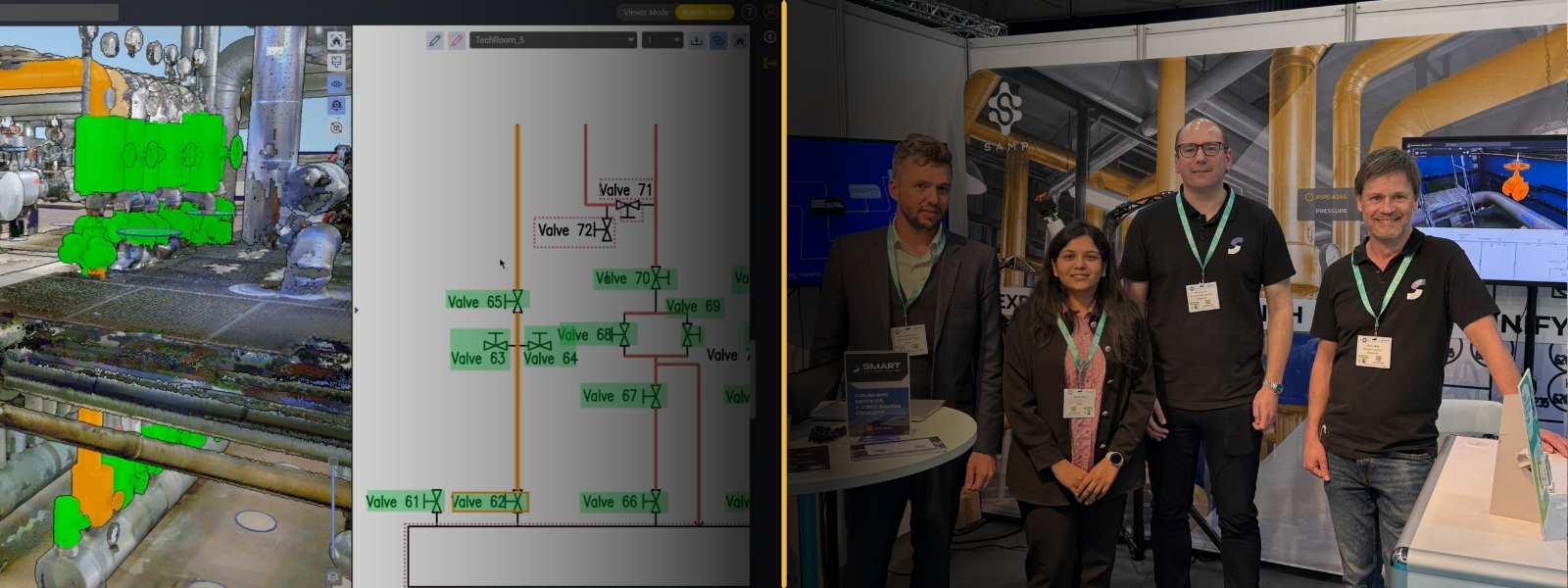
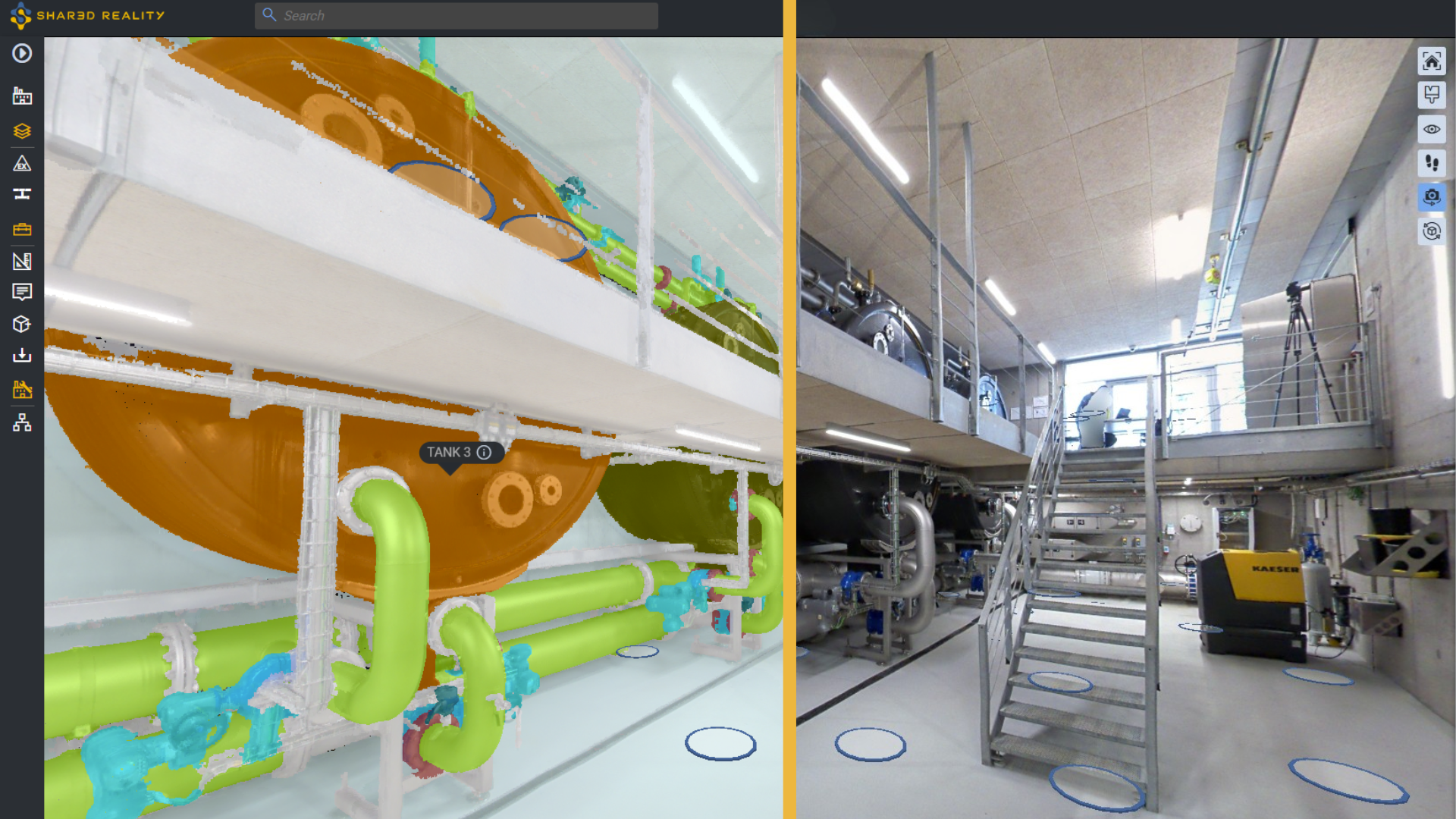
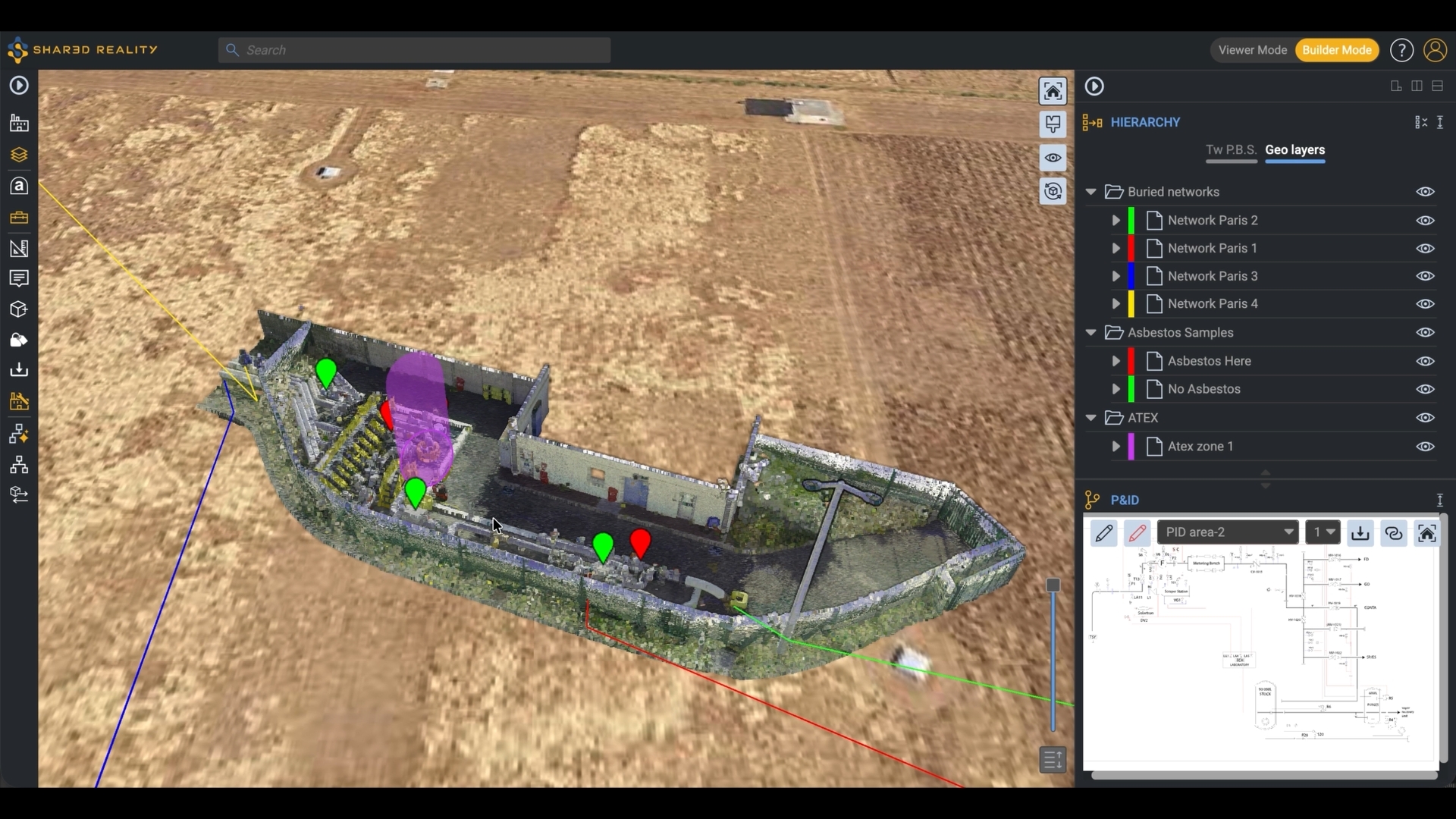
It is a cloud-based workspace built around a 3D reality model of the existing site.
In practical terms, it allows operators to:
- Navigate the actual facility virtually
- Click on equipment within the 3D reality model
- Access aligned technical information
- Compare historical and current states
- Support field validation during walkdowns
AI-assisted features can help suggest connections between equipment and documents. However, all associations remain human-verified. This ensures operational reliability.
For teams exploring implementation, integration capabilities are detailed here:
https://samp.ai/integration/
For real-world deployment examples, see client stories:
https://samp.ai/client-stories/
For onboarding methodology and knowledge transfer, see:
https://samp.ai/tutorials/
For product evolution and roadmap visibility:
https://samp.ai/whats-new-in-shared-reality-product-updates-2025-04/
For a strategic perspective on why traditional BIM approaches fail in critical industries:
https://samp.ai/the-death-of-bim-why-traditional-approaches-are-failing-critical-industries/
FAQ
What is Brownfield digitalization?
Brownfield digitalization refers to the process of digitizing and structuring information for existing industrial sites. Unlike greenfield projects, Brownfield initiatives must start from current as-built conditions and adapt to ongoing operational changes.
Why is CAD inefficient for Brownfield environments?
CAD is optimized for controlled design workflows. In Brownfield environments, frequent field modifications and operational adjustments outpace CAD update cycles, leading to outdated drawings and verification delays.
What tool is better suited for Brownfield operations?
Brownfield operations benefit from a cloud-based 3D reality model embedded in a Shared Reality workspace. This approach aligns technical information with actual site conditions and supports faster operational decisions.
Conclusion & Operational Takeaway
The core problem is clear.
Brownfield environments evolve continuously, but CAD workflows move at engineering speed.
This mismatch creates risk, delays, and operational inefficiency.
Brownfield digitalization should not attempt to force existing sites into design-centric tools. It should begin with field reality and support operational tempo.
For any Brownfield site, make a 3D reality model within a Shared Reality workspace your operational reference layer, and use CAD strictly for design tasks.
Start here:
https://samp.ai