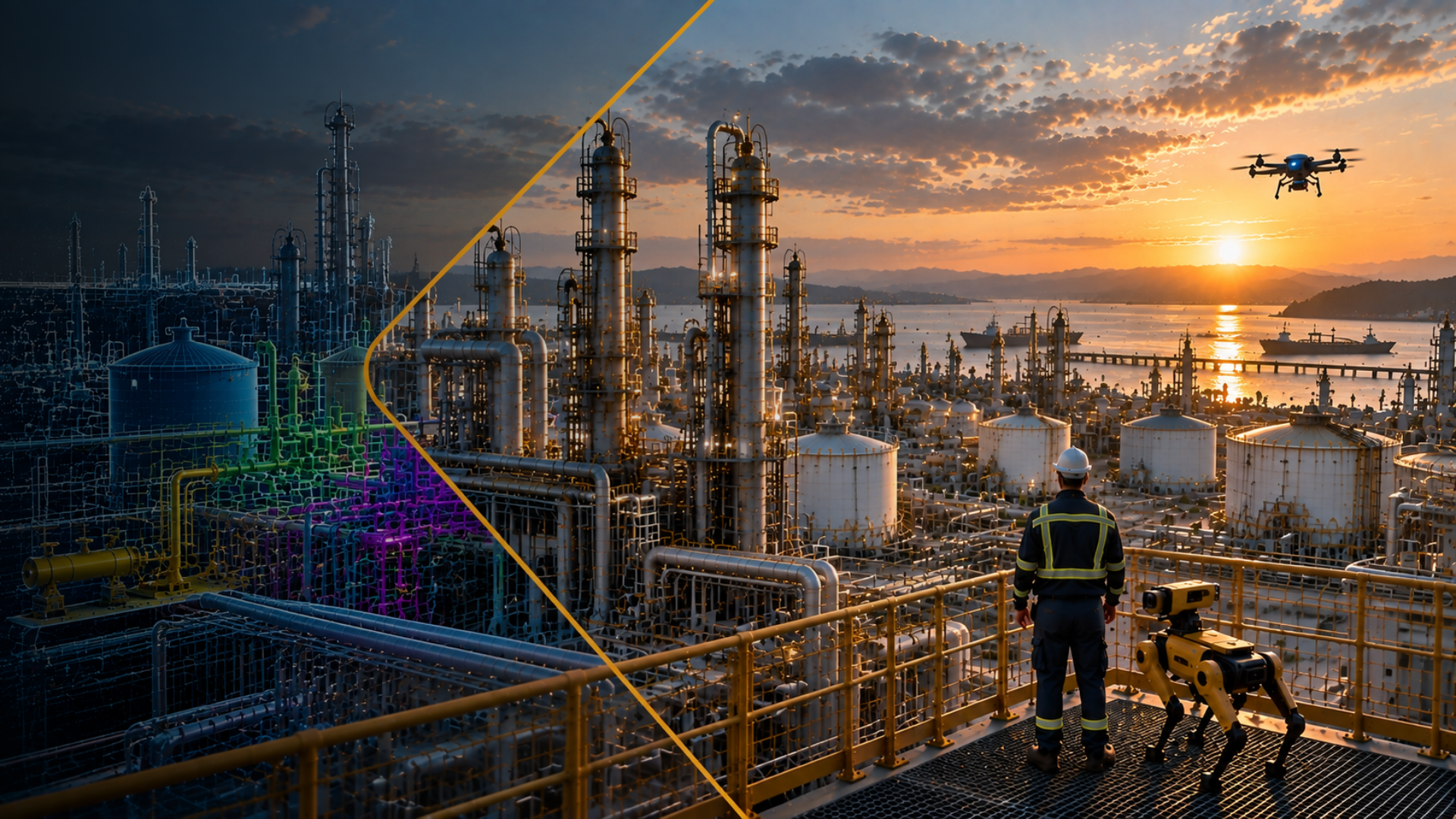
The oil and gas industry is in the midst of a critical transformation. Between aging infrastructure, new energy mandates, and growing complexity across operations, the sector is under pressure to become more efficient, connected, and resilient.
Yet the road to modernization is littered with a familiar obstacle: unreliable data. P&IDs that don’t match field conditions. Outdated equipment lists. Critical information lost in silos or buried in spreadsheets. For an industry where safety and precision are non-negotiable, these disconnects are more than inconvenient, they’re dangerous.
Shared Reality, an intuitive digital workspace designed by and for oil and gas professionals, offers a fresh way forward. It’s not about “going digital” for the sake of it. It’s about making sure that what teams see on paper matches what’s happening in the field and keeping that alignment alive every day.
The Disconnect Between Field and File
Anyone who’s ever walked a site knows this: what’s in your systems rarely mirrors the physical reality on the ground . Even with 3D scanning and digital twin initiatives underway, operators often find themselves relying on stale CAD models, disconnected asset data, and tribal knowledge that lives with a few key individuals.
Changes in the field are frequent: pipe reroutes, equipment swaps, undocumented fixes and unless someone takes the time to manually update the system, that information is lost to everyone else. Over time, this leads to costly surprises during turnarounds, delays in project execution, and unnecessary exposure to HSE risk.
What’s needed isn’t just more data. It’s a way to unify and visualize existing data in a way that all teams – from maintenance to engineering to procurement – can actually use.
Shared Reality: Built for Oil & Gas Complexity
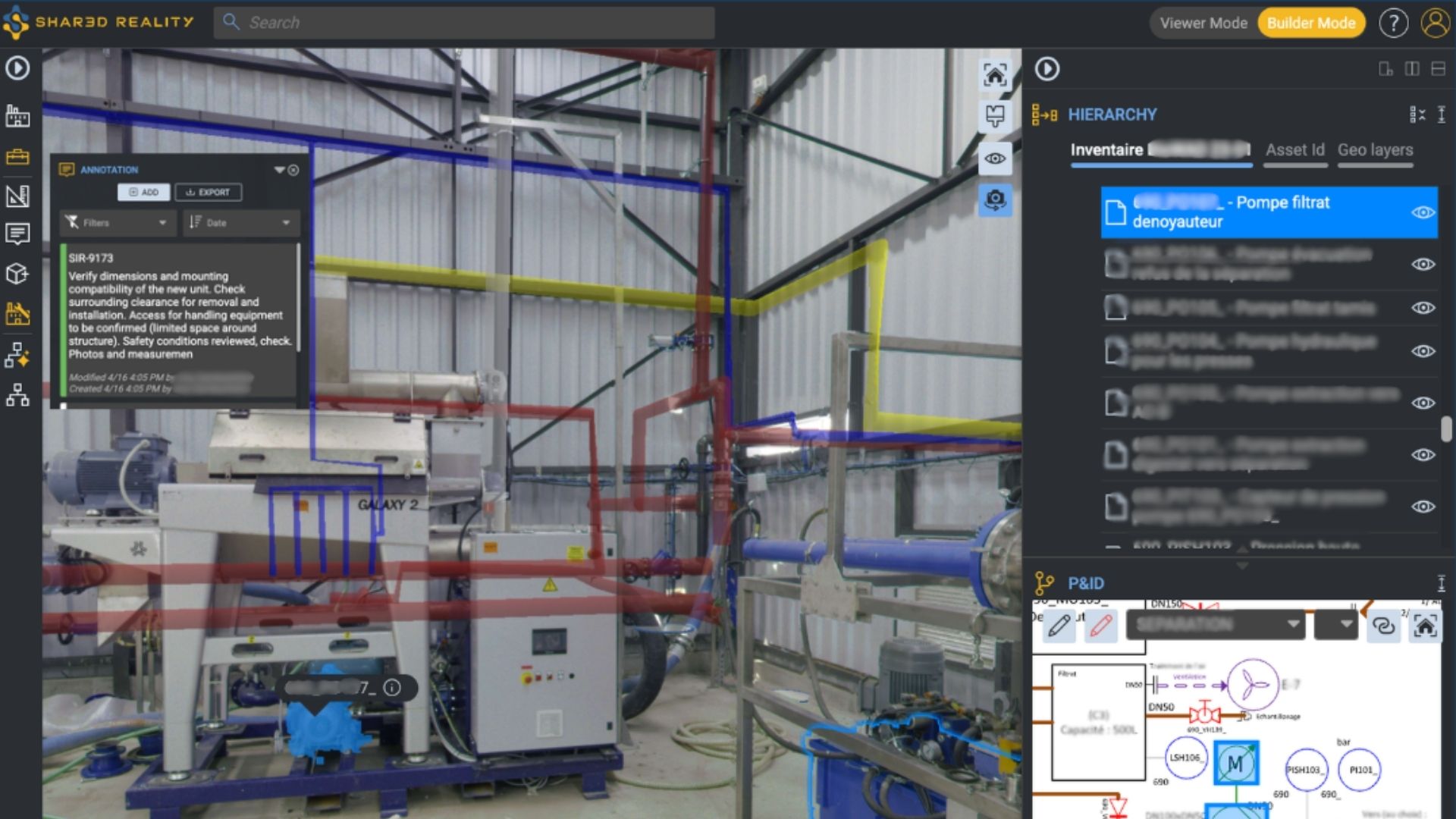
Shared Reality is a visual, AI-assisted workspace that helps connect 3D scans of real-world facilities to technical diagrams and asset metadata. It’s not a replacement for existing systems – it’s the glue that holds them together.
Using mobile photogrammetry or laser scanning, Shared Reality can host entire facilities in days. These 3D reality models aren’t static – they’re dynamic, interactive, and enriched with metadata from your flowsheets, asset registers, and document systems. Collaboratively built across different teams, onsite and offsite, they’re shareable via a secure streaming portal, with everyone from procurement to external contractors.
When site conditions change, updates can be captured instantly using a smartphone or tablet, and by redlining diagrams. This makes it possible for field teams to participate directly in keeping the digital environment accurate – without needing a CAD model.
AI That Assists, Not Replaces
With the new P&ID Revalidator, Shared Reality can even help users connect 3D assets with 2D flowsheets – accelerating digital twin builds. By doing so, all links are verified by humans, keeping users in control while delivering at scale.
This balance between machine speed and human judgment is especially important in high-risk industries like oil and gas. Shared Reality doesn’t replace field knowledge – it amplifies it.
Real Impact, Proven in the Field
Operators like Trapil, Elengy, and Storengy have already rolled out Shared Reality across tank farms, LNG terminals, and gas processing facilities. The benefits have been clear:
- Trapil now manages 2,000 km of pipelines, 65 sites and six tank farms through the platform, reporting a 20% reduction in staff travel and faster turnarounds.
- Storengy deployed Shared Reality across multiple sites in less than a year, without relying on expensive CAD remodels, it is now connected to 6 existing IT systems.
- Elengy used the platform to de-risk a major LNG terminal revamping project, streamlining hazard studies, contractor onboarding, and commissioning.
This isn’t proof of concept. It’s proof of performance.
What This Means for the Industry
Shared Reality doesn’t ask oil and gas companies to reinvent their operations. It meets them where they are, with tools they have today, to bring order, clarity, and agility to complex environments. The technology is practical, scalable, and grounded in the operational realities of the sector.
Most importantly, it helps rebuild trust between the digital and the physical worlds. And that trust is the foundation of safer, more efficient operations.
In the coming years, as the energy transition demands ever smarter infrastructure and better decision-making, oil and gas companies that invest in true data alignment – not just digitization – will be the ones best positioned to lead.
And with solutions like Shared Reality, that future is no longer out of reach.
Preparing for an upcoming turnaround or major modification project?
Discover how Shared Reality helps operators validate documentation, compare field conditions against engineering records, reduce unnecessary site visits, and improve project readiness before execution begins.
Book a demo to learn more.