What is Management of Change (MoC) in a process plant? A plain-language guide
Management of Change (MoC) is the formal process a plant uses to review, approve and record any change to its equipment, chemicals, technology or procedures before that change is made. Its purpose is simple: make sure every change is understood, its risks are assessed, the right people approve it, and the plant’s technical information still matches reality afterwards.
Why does Management of Change exist?
Process plants are designed as a whole. A change that looks small in one place, such as a different valve, a new bypass or a modified operating step, can affect pressures, flows, safety systems or how people work elsewhere.
MoC makes sure someone asks the right questions before the change happens: why it is needed, what could go wrong, and what else must be updated.
In many countries it is also a regulatory requirement. In the United States, for example, it is one of the elements of OSHA’s Process Safety Management standard (29 CFR 1910.119, paragraph l). For a closer look at how PSM depends on reliable drawings, read OSHA PSM begins with accurate P&IDs.
What counts as a “change”?
In practice, a change is anything that makes the plant different from what is currently designed, documented and approved. Typical examples:
- Equipment: a new pump, a rerouted line, a different valve type, an added instrument.
- Chemicals and materials: a new feedstock, additive or material of construction.
- Technology and operating limits: new set points, capacities or control logic.
- Procedures: a modified start-up, shutdown or maintenance procedure.
- Temporary changes: a temporary bypass or repair that will be removed later.
What usually does not need an MoC is a “replacement in kind”: swapping a part for one that meets the same design specification.
What are the typical steps of an MoC?
Every company writes its own procedure, but most follow a similar path:
- Request. Someone describes the proposed change and why it is needed.
- Technical review. Engineers check the technical basis and the impact on safety and health, often with a hazard review.
- Approval. The people named in the procedure authorise the change, and its duration if it is temporary.
- Implementation. The change is carried out in the field.
- Update and train. Process safety information, diagrams and procedures are updated, and affected people are informed and trained.
- Start-up and close-out. The changed process restarts after a final check, and the MoC record is closed.
Where does Management of Change break down?
Most MoC procedures are well designed. The weak point is usually step 5: getting the plant’s technical information back in line with what was actually built.
The change happens in the field in days. Updating every diagram and document it touches can take much longer, and small field adjustments made during implementation may never reach the drawings at all. Over time, each new MoC starts from a baseline that is slightly less reliable than the last. Around 30% of P&IDs contain discrepancies with what is actually installed.
That creates a loop problem: if the starting information is uncertain, every new review has to re-verify it first, often with another site visit.
How do teams keep MoC reliable?
Teams that run MoC well treat it as a loop, not a form:
- Start from information that matches the field. Reviewers can see the actual equipment, not just the drawing.
- Plan and review with the site in view. Engineers check access, surroundings and connected equipment before approving.
- Feed verified changes back. Once the work is done, the as-built result goes back into the diagrams quickly, so the next MoC starts from a trusted baseline.
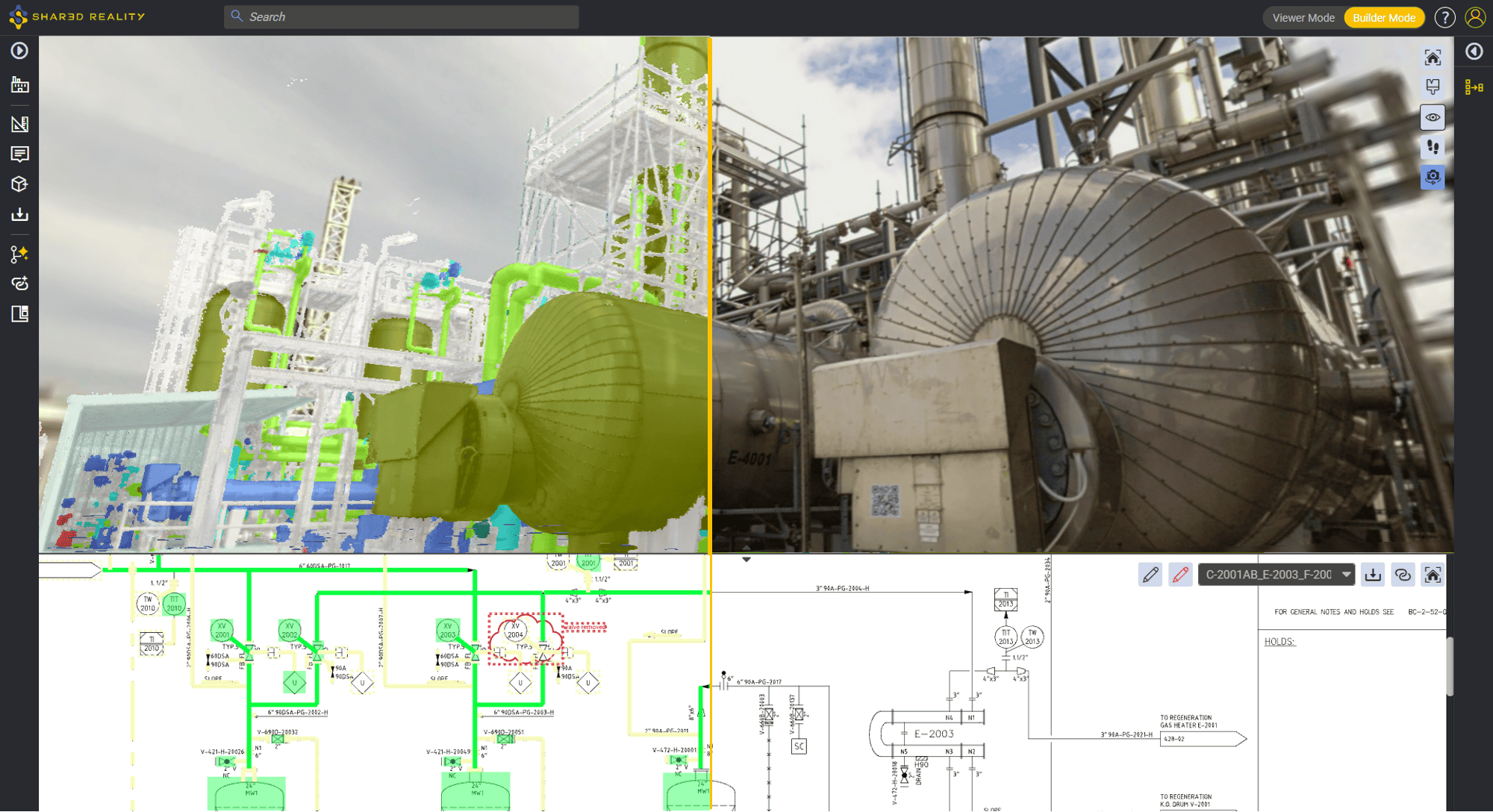
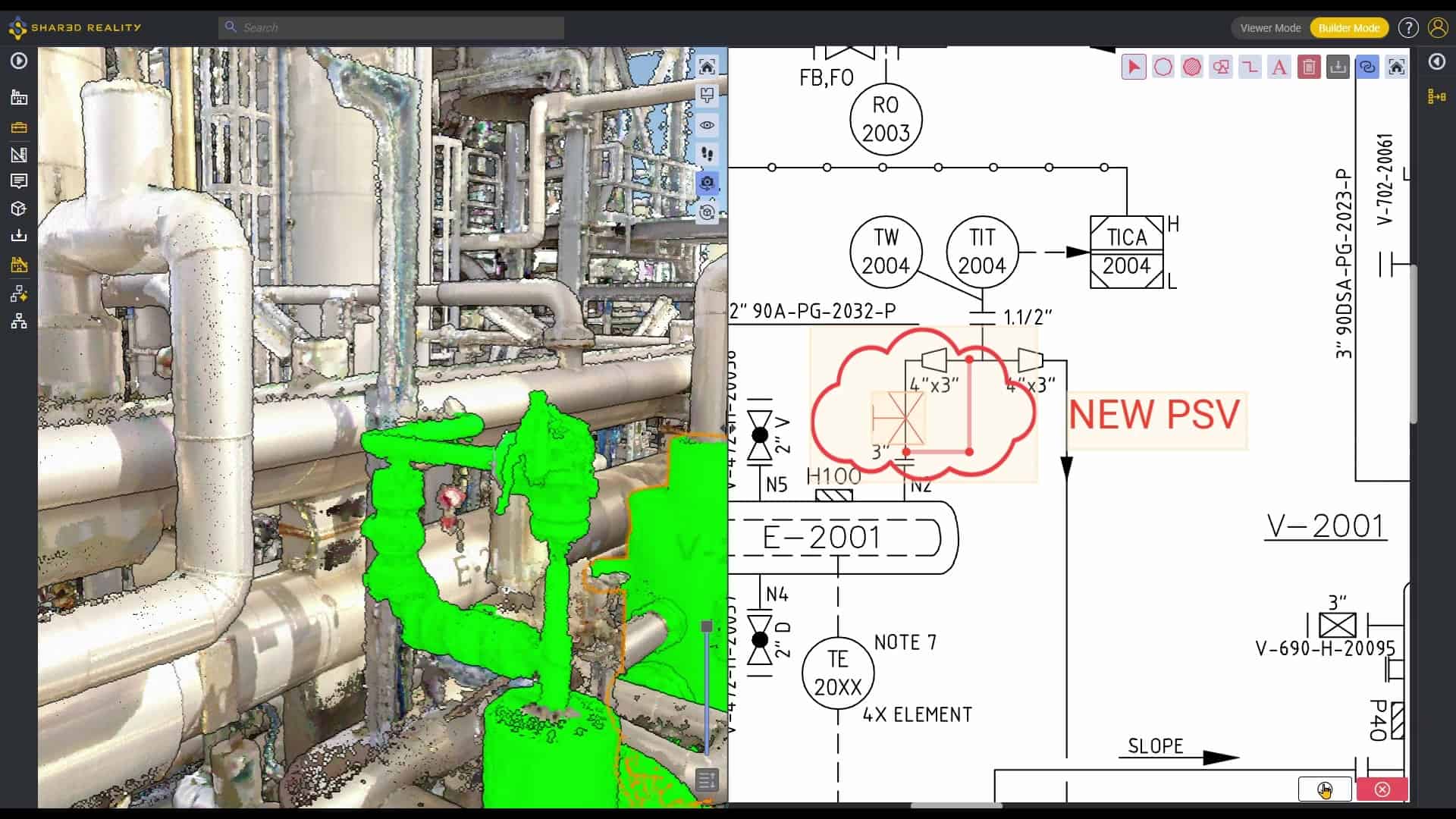
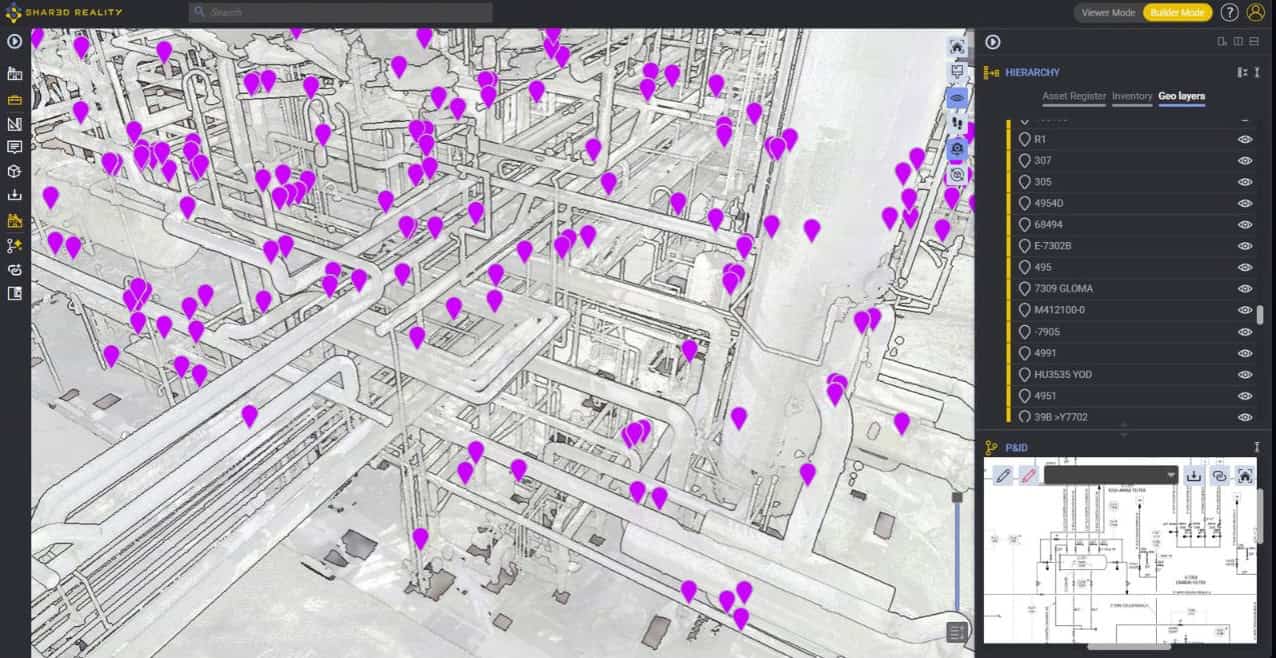
This is the loop Shared Reality supports. It turns 3D scans of a site into a 3D reality model and helps you link it to your P&IDs, so reviewers see the equipment next to the diagram that describes it, and field teams can mark up what changed. With Shared Reality, teams have made their MoC workflow 75% faster.
FAQ
Is Management of Change mandatory?
In many jurisdictions, yes, for plants that handle hazardous substances above certain thresholds. In the US it is part of OSHA’s Process Safety Management standard; other countries have equivalent requirements in their process safety rules.
What is a “replacement in kind”?
A replacement that meets the same design specification as the original, for example the same valve model and rating. It typically does not require an MoC.
These organizations open Shared Reality to their staff, supply chain, partners, contractors, inspection or certification bodies, to ensure that all parties work with a shared context of the physical assets, and that each party can contribute to check, flag or update data. This principle is called “crowd sourcing of data quality”, and is the cornerstone of continuous improvement and operational excellence.
Does a temporary change need an MoC?
Yes. Temporary changes go through MoC too, with a defined time period, and must be reversed or made permanent through the process.
Who is involved in an MoC?
Usually the change originator, process and discipline engineers, operations, maintenance, process safety, and the approvers named in the procedure. Contractors are involved when they carry out or are affected by the change.
Is MoC the same as organisational change management?
No. Process safety MoC covers physical and procedural changes to the plant. Organisational change management is about people and structures, although changes in staffing can also affect process safety.
Why do drawings fall behind after an MoC?
Because updating technical information is the last step, competes with urgent work, and depends on field adjustments being reported. Without an easy way to feed the as-built result back, the gap between the drawings and the field grows with every change.