Samp reveals 30% data gaps in industrial sites, highlighting potential risks and inefficiencies

In an interview with Business Mondays journalist Harriet Evans, Laurent Bourgouin, CEO of Samp, shared that industrial sites are facing a significant challenge with inaccurate technical documentation, with error rates reaching 30%. Samp’s research shows that documentation errors increase by 1% annually due to unrecorded asset changes. In facilities averaging 30 years old, this inaccuracy becomes more pronounced, with older sites seeing even higher levels of error.

In the article, Laurent discusses Samp’s mission to transform industrial site management, emphasizing how poor data integrity leads to inefficiencies, increased downtime, and higher maintenance costs. A survey of 24 European industrial site managers revealed that only one respondent had over 80% “clean” data, while 12 managers estimated their clean data at 60% or below, highlighting a widespread issue with data accuracy. These documentation errors lead to costly unplanned downtime, which costs manufacturers around $50 billion annually, as well as increased maintenance expenses and compliance risks.

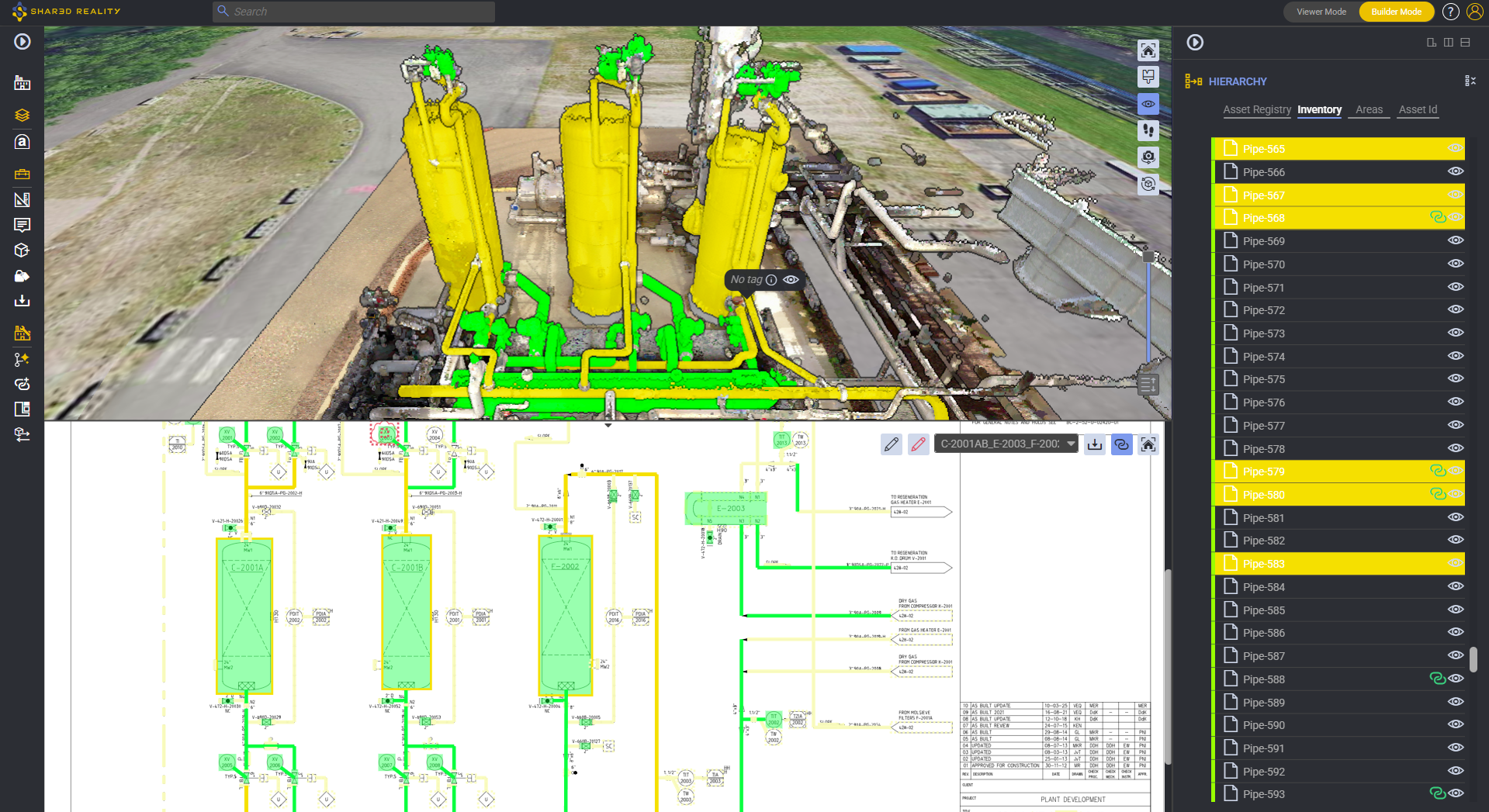
Laurent explained that Samp’s Shared Reality solution can resolve these issues in just a weekend, integrating real-world site conditions with technical documentation. By providing a single, reliable source of truth, the technology ensures that teams across operations, maintenance, and management can work more efficiently, safely, and cost-effectively.

For the full interview published on Feb. 19, 2025  by Harriet Evans, visit the Business Mondays site.
More to explore

Automated Spatial Tagging

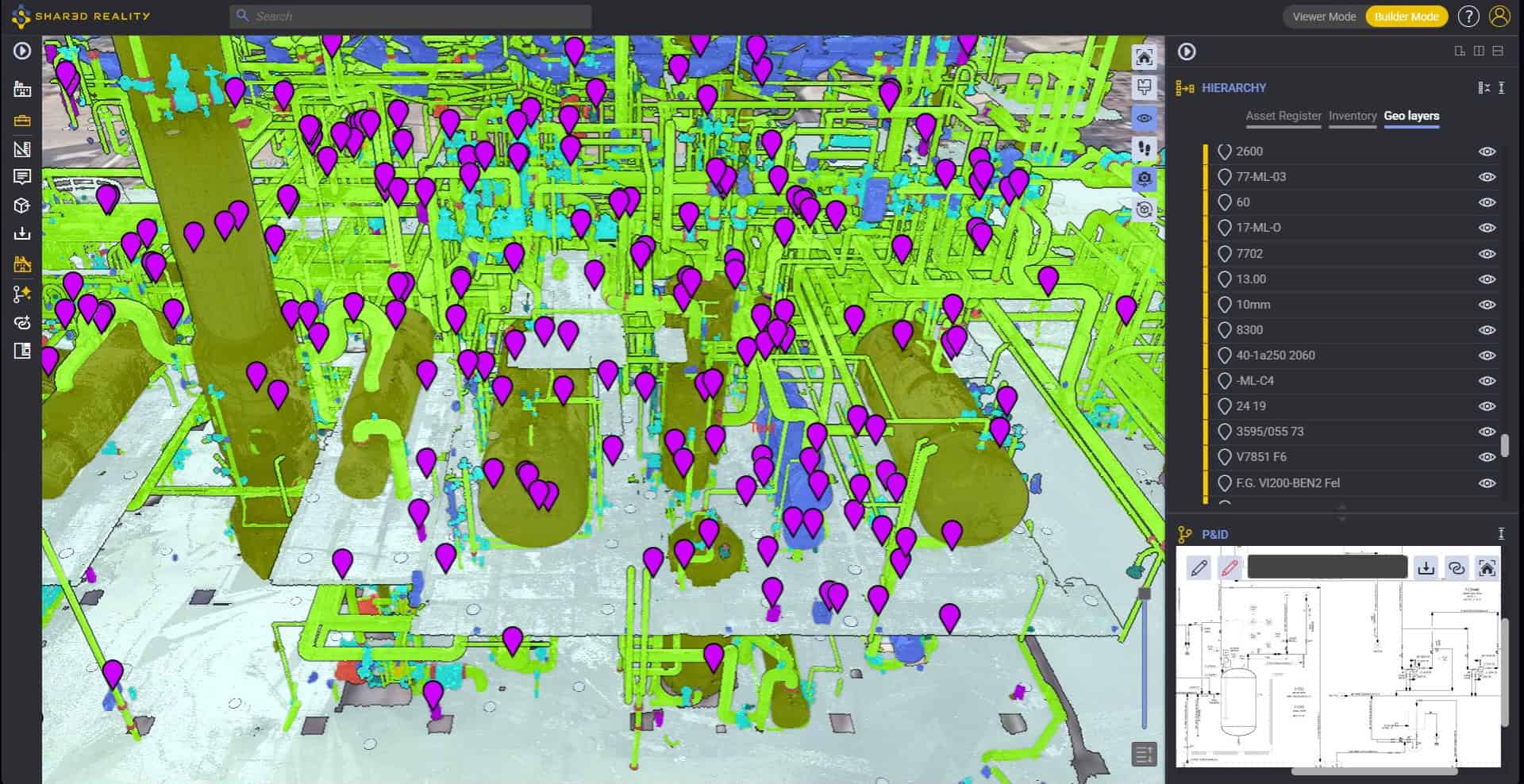
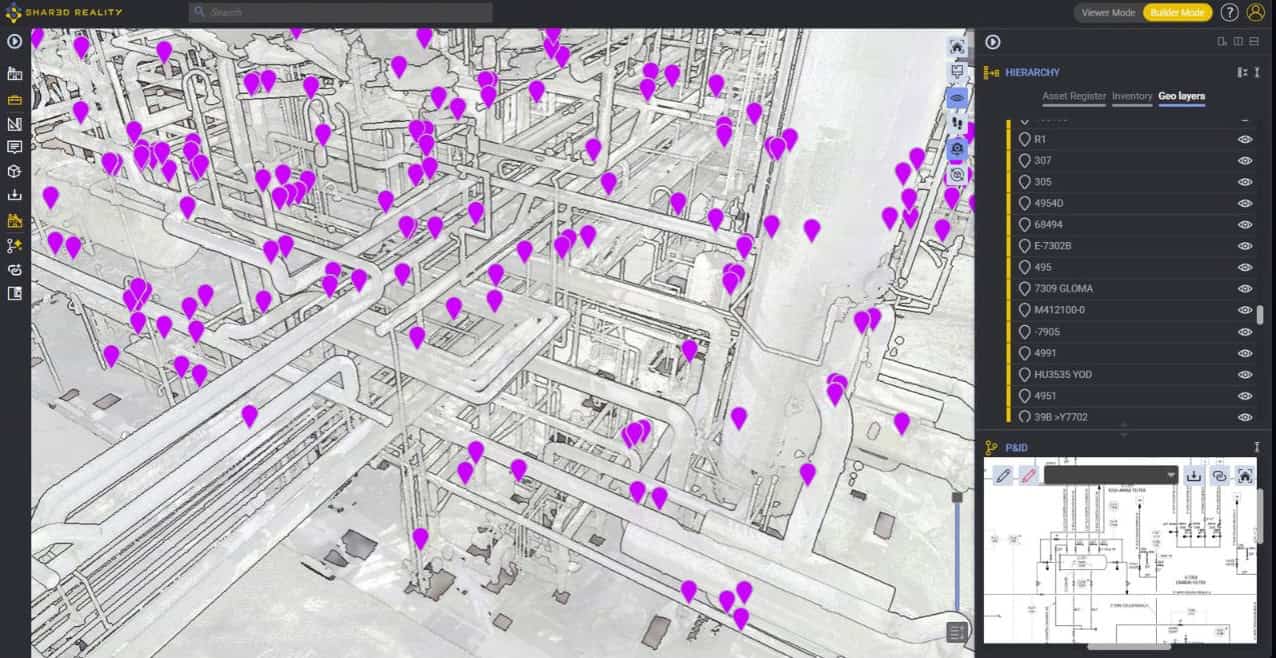
Through automated spatial tagging—powered by in-scan Optical Character Recognition (OCR) embedded within Shared Reality and its Assetizer AI engine—operators can now extract physical label data directly from 360° panoramic imagery embedded in 3D scans. By anchoring physical plant labels directly to CMMS tags and 3D geometries without requiring an existing, validated P&ID as an intermediary, industrial operators can rapidly turn monolithic scans into interactive digital twins, streamline turnaround (TAR) preparations, and unlock comprehensive line-by-line P&ID validation via automated pipe crawling.

A Reality-Based Evolution for RBI and Process Safety Management

In brownfield refining, petrochemical, chemical, and offshore processing facilities, maintaining dedicated “inspection isometrics” represents one of the most resource-draining, error-prone overheads in Asset Integrity Management (AIM). For decades, plant operators have treated 2D Computer-Aided Design (CAD) piping isometric drawings as the mandatory medium for mapping Condition Monitoring Locations (CMLs), defining corrosion loops, and executing Risk-Based Inspection (RBI) workflows under API 570 and API 580/581.

Webinar: Automated Spatial Tagging

Discover how Shared Reality helps you visually isolate piping circuits and corrosion loops instantly, bridging the gap between engineering data and field execution.

Scroll to Top
Logo Samp